
Hornworms
The Nutritional Biochemistry of the Hornworm

Beyond the Label: What the Numbers Actually Mean
Hornworms carry a distinctive nutritional signature: roughly 85% moisture, 9% protein, 3% fat, and a notably calcium-forward 3.07:1 calcium-to-phosphorus ratio. Set next to a protein-dense feeder like a discoid roach (~20% protein), that 9% figure reads as low — and it's tempting to conclude hornworms are simply a "weaker" feeder nutritionally. That conclusion is wrong, and understanding why requires looking past the as-fed percentage into the biochemistry actually driving it.
The Water-Dilution Effect: Why "9% Protein" Is Misleading on Its Own
A nutritional percentage measured "as-fed" — meaning as the animal is actually eaten, water included — is diluted by whatever fraction of the total weight is water. Hornworms are roughly 85% water by weight, nearly the highest of any common feeder insect, which means the remaining 15% of the animal's weight (everything that isn't water — protein, fat, chitin, minerals) has to carry the entire nutritional payload. Recalculated on a dry-matter basis — protein as a percentage of the non-water portion of the animal, the way agricultural feed analysis typically compares nutrient density across foods with very different water content — hornworm protein content works out to roughly 60% of dry matter, a figure that stands up respectably against most other common feeder insects rather than looking like an obvious weak point.
This matters because "as-fed" and "dry-matter" percentages answer two different practical questions. As-fed tells you what's actually delivered in a single feeding of a given weight of live insect — genuinely useful for portioning. Dry-matter tells you whether the animal's tissue itself is nutritionally dense or dilute, independent of how much water happens to be mixed in. A hornworm isn't protein-poor tissue; it's protein-respectable tissue carrying an unusually large amount of water alongside it. Both facts are true and both matter for different reasons — the as-fed number is why hornworms function as a hydration supplement rather than a protein staple, and the dry-matter number is why that's a description of role, not a description of poor-quality tissue.
What 85% Moisture Actually Delivers, Physiologically
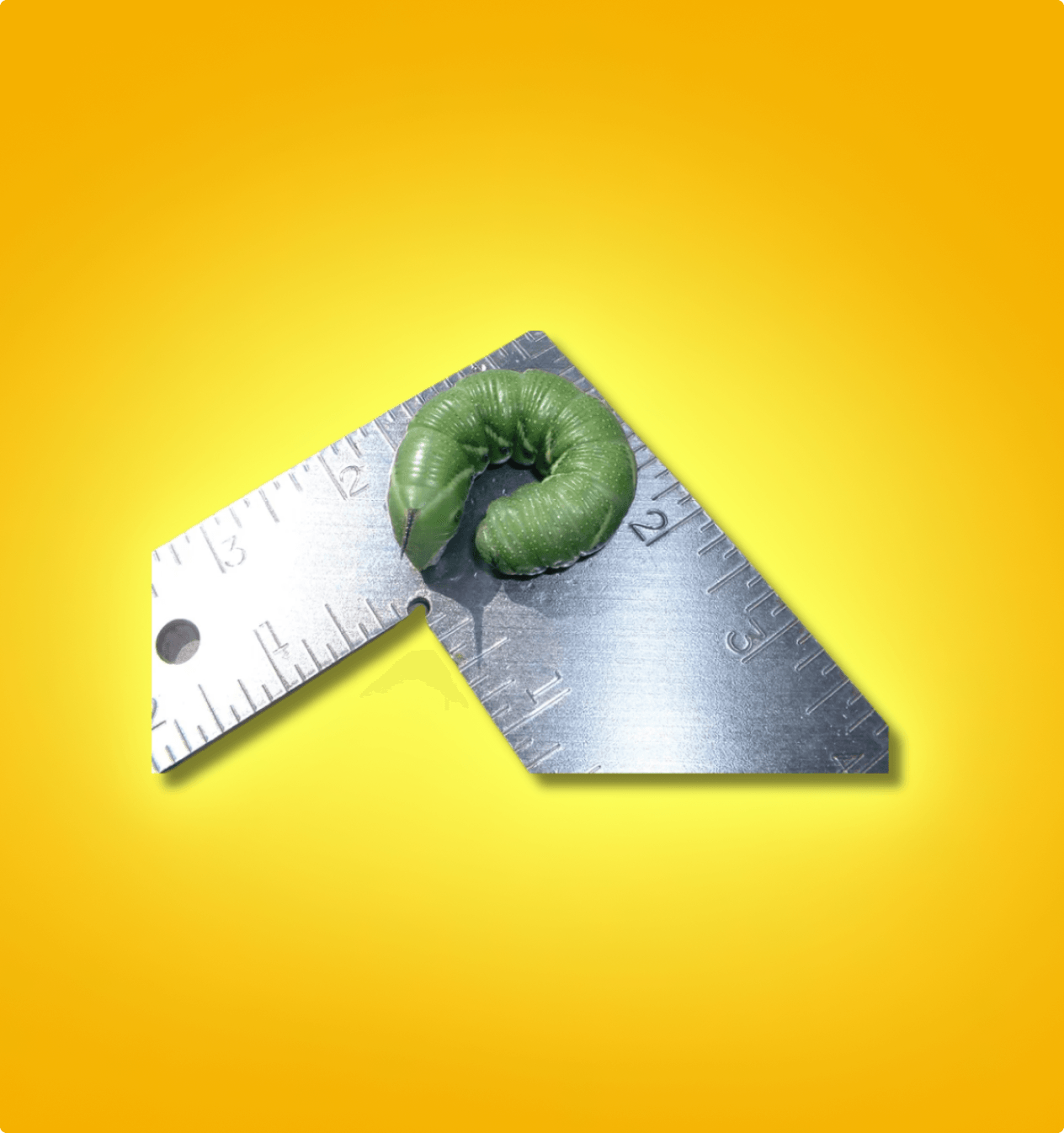
The moisture figure is the single biggest number separating hornworms from nearly every other common feeder, and it's worth being precise about what it does and doesn't do. Water bound up in living tissue isn't equivalent to water in a dish — it's distributed through hemolymph, muscle, and organ tissue, and it's released gradually through digestion alongside the nutrients it's bundled with rather than absorbed all at once the way drinking free water is. That gradual, digestion-linked delivery is part of why a hydration-forward feeder like a hornworm is specifically useful for situations where steady, sustained hydration support matters more than a single large water intake — shedding cycles, recovery from illness, or species and life stages prone to dehydration, all of which show up repeatedly across this site's species-specific hornworm content as genuine, biology-backed use cases rather than a generic marketing claim.
It's also worth reading the other macronutrient figures with the moisture number in mind: at 85% water, only 15% of a hornworm's weight is everything else combined, which is precisely why the dry-matter recalculation above tells such a different story than the as-fed protein number alone. A feeder this water-heavy will always look "diluted" on an as-fed basis relative to a drier feeder like a discoid roach, regardless of how nutritionally dense its actual tissue is — the moisture content and the protein content aren't in tension with each other, they're two separate, both-true facts about the same animal.
The Calcium Story, in Real Numbers
The 3.07:1 calcium-to-phosphorus ratio is unusually favorable compared to most feeder insects, many of which run closer to parity or are actually phosphorus-heavy (working against calcium absorption, as covered in this site's companion piece on discoid roach nutrition). In absolute terms, published composition data for hornworms puts calcium content at roughly 464 mg per kilogram and phosphorus at roughly 1,394 mg per kilogram — figures whose ratio (right around 3:1) matches AAC's own verified product figure closely and confirms this isn't a rounding artifact or marketing simplification.
The physiological reason this ratio matters was covered in more depth in this site's companion nutrition piece on discoid roaches: phosphorus in excess relative to calcium interferes with calcium absorption, and a diet running consistently phosphorus-heavy without correction is a direct, well-documented contributor to metabolic bone disease in reptiles. A feeder that's naturally calcium-forward rather than calcium-poor is, on this specific axis, working with a keeper's supplementation efforts rather than against them — one of the more concrete, numbers-backed reasons hornworms earn a regular place in a feeding rotation despite their modest as-fed protein content.
The Fat Fraction: Genuinely Low, Not Just Marketed That Way
At roughly 3% fat as-fed, hornworms sit at the low end of common feeder insects — well below fattier options like waxworms or superworms, and below discoid roaches' already-lean ~7%. This isn't a rounding-friendly marketing number; it reflects the caterpillar's actual biology at the life stage typically sold as a feeder. Published research on this species has found its growth and feeding performance is measurably affected by dietary fat content, with the animal's own physiology tuned around the balanced nutrient composition of its natural diet rather than around fat accumulation the way some other feeder insects' larval stages are. The practical result for a keeper is a feeder that's close to reliably low-fat across the board, which is part of why it shows up repeatedly across this site's species-specific content as a safer option for feeding obesity-prone captive reptiles and amphibians without needing to worry much about batch-to-batch variation in fat content.
Hornworms and Nutrient Self-Selection: A Genuinely Studied Behavior
One of the more interesting findings in Manduca sexta nutritional research is that the species shows real nutrient self-selection behavior — when offered diets with different nutrient ratios, larvae adjust their feeding to compensate, consuming more of a nutrient-poor food source to make up a shortfall in one specific nutrient, effectively regulating their own intake toward a target nutritional balance rather than eating a fixed quantity regardless of composition. This kind of active nutritional self-regulation is a well-studied phenomenon in insect physiology broadly, and it's part of why the species performs consistently well on the varied formulated diets used in commercial rearing — the animal itself is doing some of the nutritional balancing work, not just passively absorbing whatever composition its diet happens to be.
Hornworm vs Discoid Roach: Two Different Nutritional Jobs
Placed directly against discoid roach biochemistry (covered in this site's companion piece), the two feeders aren't competing for the same nutritional role — they're structurally complementary. Discoid roaches run protein-forward and moisture-moderate (~20% protein, ~65% moisture), built to function as a genuine dietary staple. Hornworms run moisture-forward and calcium-forward with modest as-fed protein (~85% moisture, ~9% protein, but a strong 3.07:1 Ca:P), built to function as a hydration and calcium-support supplement layered on top of that staple. Feeding hornworms as an attempted protein-staple replacement would mean under-delivering on protein relative to a growing or maintaining reptile's actual needs; feeding only discoid roaches without any hydration-forward feeder in rotation means missing out on a genuinely useful, low-fat calcium boost hornworms are unusually well suited to provide. The two feeders' biochemistry is different by design, not by one being simply "better" than the other — which is the actual nutritional case for AAC's own standing guidance to rotate hornworms alongside a protein staple rather than treat either as a complete standalone diet.